
"tropical coffee regions"
4000 article(s) found

Introduction to coffee producing areas in Honduras (1): characteristics of coffee in the Agalta tropical region of Agatha
For the exchange of professional baristas, please follow the coffee workshop (Wechat official account cafe_style) introduction to Honduras coffee producing areas (1): Agalta Tropical region Agalta Tropical Zone: this area, which straddles parts of the provinces of Olancho, El Paraiso and Francisco Morazn, is mainly the eastern province and is the most scattered area, composed of 14 protected areas to increase.

Honduras is located in the tropical region of San Juan cidol low acid bourbon.
Because Honduras is located in the tropics, the annual temperature change in San Juan Theodore is more than that.
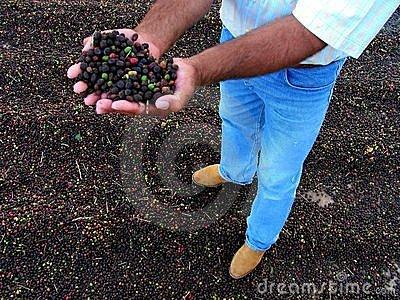
Taste description of Brazilian South Minas Coffee in Tropical Rain Forest region
Taste description of Brazilian South Minas Coffee in Tropical Rain Forest region Brazilian producing areas can also be divided into five grades according to this standard: extremely supple: South Minas, Serrado platform in the central and western part of Minas / Mojiana / Bahia Diamond Plateau in the northeast of Sao Paulo province: slightly higher in the Bahia / Minas southeast forest / Parana / Espiritu (hills) / S ã o Paulo

Description of Price and Flavor of single Coffee Bean in Brazil introduction to the Regional treatment method of Manor production
Brazil is located in the Latin American region of the Western Hemisphere, located in the eastern part of South America and on the west coast of the Atlantic Ocean, bordering all countries on the South American continent except Ecuador and Chile; most of its territory lies between the equator and the Tropic of Cancer. It is the most tropical country in the world. The territory has a tropical rain forest climate and a tropical prairie climate. The superior tropical natural conditions are very suitable.

Introduction to the flavor description and processing method of Brazilian Huangbo single coffee bean price manor region
Brazil is located in the Latin American region of the Western Hemisphere, in the eastern part of South America and on the west coast of the Atlantic Ocean. Brazil is bordered by all countries on the South American continent except Ecuador and Chile. Most of its territory lies between the equator and the Tropic of Cancer and is the most tropical country in the world. Within the territory 1x3

Gujinbela Sakui | Solar treatment in Sidamo region G1 with strong tropical fruit flavor
Professional coffee knowledge exchange more coffee bean information please follow the coffee workshop (Wechat official account cafe_style) front street-Sidamo Sakuran introduction the Ethiopian administrative region is divided into four levels, from large to small order is Region, Zone, woreda, kebele, most of the raw coffee bean names follow this rule, such as Sakui, located in the Sidamo producing area

A brief introduction to the flavor description and taste characteristics of Brazilian South Minas coffee in the tropical rain forest region
At present, there are 2 million hectares of land in Brazil for growing coffee, the largest of which is Arabica. These beans will eventually be sent to large bakers in various countries, known as Sandos (in the name of the port of export santos, not the producing area). Because of the coffee competition after 2000, the quality of coffee beans produced in the high-altitude regions of the south was appreciated by its Minas.

Papua New Guinea coffee region in the tropics
Bird of Paradise is from Pakistan's famous farm Sigri Estate, even if there is no name for this beautiful bird of paradise, it comes from a famous family. Sigri is known for its beautiful environment, pleasant climate, and traditional and rigorous coffee processing. Internationally, if you say Bird of Paradise, it's a bit ambiguous. People can only know that it's beans from Pakistan, but for example,

Brazilian Coffee Bean Flavor Description Characteristics Taste Treatment Variety Region Grinding Scale
Brazil coffee beans flavor description characteristics taste processing method varieties of production area grinding scale Brazil in terms of natural conditions, in the tropical region, the north is a tropical rain forest climate, hot and humid all year round, suitable for tropical crops to grow, coffee trees for sun-loving crops, sufficient sunlight for its growth conditions. Historically, Brazil has long been a Portugal colony. In order to meet the needs of Western Europe, Brazil has long carried out

A brief introduction to the development of the planting base map of Bourbon Rivida beans under regional conditions of Hillado coffee beans in Brazil
Brazil makes full use of the tropical geographical environment and attaches importance to the production and sale of coffee, so that the output, export volume and per capita consumption of coffee have been ranked first in the world for many years, and have been praised as the coffee kingdom. But the hometown of coffee is not in Brazil, but in Ethiopia in Africa.

Taste of Dominican boutique coffee beans A brief introduction to the characteristics of market development in manor producing areas
The temperate climate in Dominica is conducive to coffee cultivation, and the best places to grow coffee are the Barahona region in the southwest and the Cibao Valley north of Santiago, Dominica's second largest city. The northern region, represented by Hibao, and the southern region, including Okayabani Santo Domingo, produce good coffee. Among them, Santo

What kind of coffee do you have for coffee beans? coffee prices today.
Coffee grows mainly in the coffee belt between the Tropic of Cancer and the Tropic of Cancer. According to the growing areas of coffee beans, there are three regions, including Asia / Pacific, Latin America and Africa / Arab regions. They are mainly characterized by their taste, Asia / Taiping region, will have a relatively strong herbal flavor or earthy aroma, Latin American coffee bean taste comparison in all aspects

Introduction to the flavor and taste of Dominican boutique coffee beans and the characteristics of the manor producing area
The earliest coffee in Dominica was introduced from Martinique (the overseas province of France), dating back to the early 18th century. Dominica is an island country with a tropical climate. The temperature changes little throughout the year. Except for the lower temperature in the Central Cordillera Mountains, which can reach less than 0 ℃ in winter, the annual average temperature in other areas is between 25 and 30 ℃, which is affected by the mountain topography.

Coffee trees usually grow in the area between the Tropic of Cancer and the Tropic of Cancer
Coffee trees are very similar to laurel and usually grow between the Tropic of Cancer and the Tropic of Cancer. A coffee tree usually grows for about three to four years before it begins to bear fruit. The fruit is a red berry, which is dried and the pulp is removed to separate the coffee beans. There are shadows of coffee beans all over the world, and they can grow as usual as long as the climate is right. These are suitable for cultivating coffee.

An introduction to the Honduran acata coffee region The flavor characteristics of acata coffee
Agalta Tropical is located in the eastern part of Honduras and is the most widely distributed area. It consists of 14 protected areas. Ecotourism is a very important economic activity for local development, and tourists can walk in the tropical forest. There are also many protected areas in the region, which also create a variety of flowers and diverse forest forms. There are many wild animals passing through the area.

Costa Rican coffee bean flavor description taste treatment grinding scale varieties
All coffee grows in the tropics, in fact, altitude has no direct effect on coffee, but altitude can affect the growth, development and quality of coffee through the redistribution of meteorological elements (temperature, light, heat, wind speed, rainfall, etc.). The tropical region between the Tropic of Cancer and the Tropic of Cancer produces the world's truly high-quality Arabica coffee. Central and South America, South Asia and

Santo Domingo Coffee in Dominica Coffee region with savanna climate
The earliest coffee in Dominica was introduced from Martinique (the overseas province of France), dating back to the early 18th century. Dominica is an island country with a tropical climate. The temperature changes little throughout the year. Except for the lower temperature in the Central Cordillera Mountains, which can reach less than 0 ℃ in winter, the annual average temperature in other areas is between 25 and 30 ℃, which is affected by the mountain topography.

Intense and inviting Guatemala coffee estate region Flavor Taste Characteristics Fine coffee beans Introduction
Guatemala is located in the tropics. The northern and eastern coastal plain areas belong to tropical rain forest climate, and the southern mountainous areas belong to subtropical climate. There are two dry and wet seasons in a year. The wet season is from May to October, and the dry season is from November to April of the following year. Guatemala has a tropical climate on the narrow, fertile plains of the Pacific Ocean. The central plateau is also the cultural center of Guatemala, where year-round temperatures range from 1300 to 1800 meters

The characteristics of Sidamo coffee beans the full tropical fruit aroma of Sidamo coffee.
Professional coffee knowledge exchange more coffee bean information please follow Coffee Workshop (Wechat official account cafe_style) Front Street-Sidamo Coffee introduces the rich and juicy African region, with floral and citrus, berry and spice flavors. As the hometown of some of the most exotic coffee in the world, the African / Arab region produces a lot of coffee, setting the standard of high quality coffee. Kenny.

What is the difference between coffee regional flavors?| What factors change coffee flavor?
Professional coffee knowledge exchange More coffee bean information Please pay attention to coffee workshop (Weixin Official Accounts cafe_style) Coffee production places are mostly distributed between the tropic of tropics north and south of the equator, i.e. 25 degrees north of the tropical or subtropical equator and 30 degrees south of the equator. Areas with an annual average temperature of 16-25 degrees Celsius, frost-free and rainfall of 1600-2000 mm. The main production of coffee today